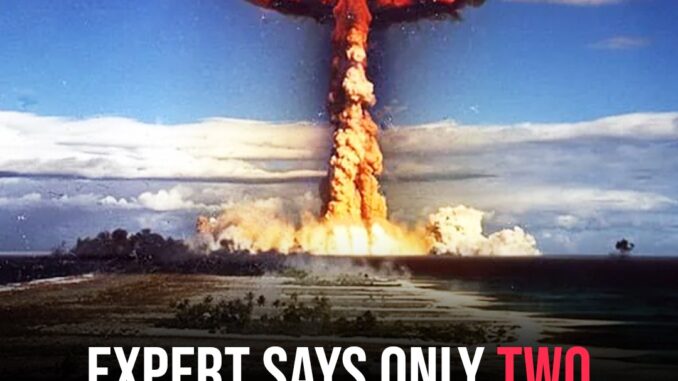
As tensions escalate following U.S. and Israeli airstrikes on Iran, fears of a potential World War III are growing across America.
President Donald Trump claims Iran restarted its nuclear program, though The New York Times reports those claims remain unproven. The U.S. launched “Operation Epic Fury,” striking Tehran and Isfahan, raising concerns about possible retaliation targeting American nuclear sites.
The U.S. maintains roughly 2,000 nuclear warheads, primarily in Montana, North Dakota, and Nebraska. A strike on these missile silos could cause catastrophic radiation fallout across multiple states. According to Newsweek, regions farther from nuclear infrastructure—parts of the East Coast, South, and Midwest—may offer slightly better short-term survival odds. However, experts warn no U.S. location would be truly safe in a full-scale nuclear war.
A 2023 report from Scientific American cautioned that attacks on U.S. missile fields could devastate farmland for years. Investigative journalist Annie Jacobsen said on The Diary of a CEO that Southern Hemisphere countries like New Zealand and Australia may offer better long-term survival chances due to distance from major nuclear powers and stronger agricultural resilience.
Bottom line: In a nuclear war, no place is truly safe—but geography could significantly impact survival odds.

Leave a Reply